How to Store a pH Probe Properly
(And Why Most Probes Fail Early)
A pH meter is only as reliable as its probe.
Many pH probes fail long before their expected lifespan — not because they’re faulty, but because they’re stored incorrectly between uses.
This article explains:
- Why probe storage matters
- What happens when probes dry out
- Why water is not a safe storage solution
- How to store a pH probe correctly for accurate, repeatable measurements
Why pH Probe Storage Matters
pH probes contain a hydrated glass membrane and an internal reference solution.
For the probe to respond accurately:
- The glass membrane must remain hydrated
- The reference junction must stay active
If either dries out, probe performance degrades rapidly.
Storage is not optional — it’s part of the measurement process.
What Happens When a pH Probe Dries Out
When a probe dries:
- Response time slows
- Readings become unstable
- Calibration drifts rapidly
- Accuracy becomes unpredictable
In severe cases, the probe may suffer permanent damage.
Once the glass membrane is compromised, no amount of recalibration can restore it.
Why You Should Never Store a pH Probe in Water
A very common mistake is storing probes in:
- Tap water
- Distilled water
- Deionised water
This causes:
- Leaching of ions from the reference junction
- Dilution of internal electrolytes
- Accelerated probe ageing
Water keeps the probe wet — but not chemically stable.
The Correct Storage Solution: KCl
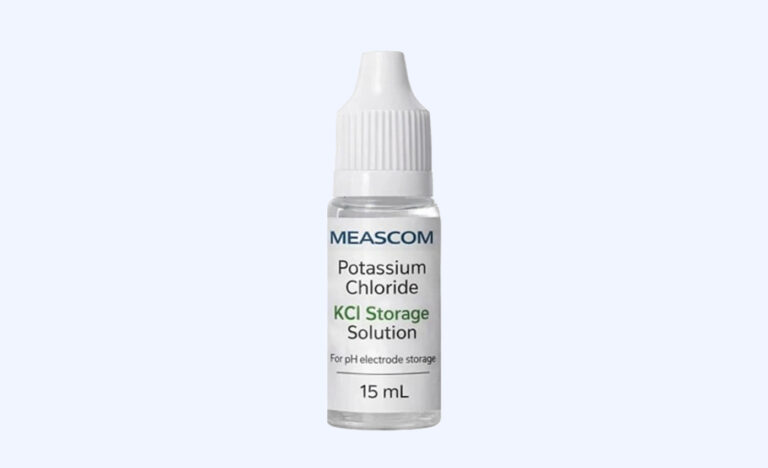
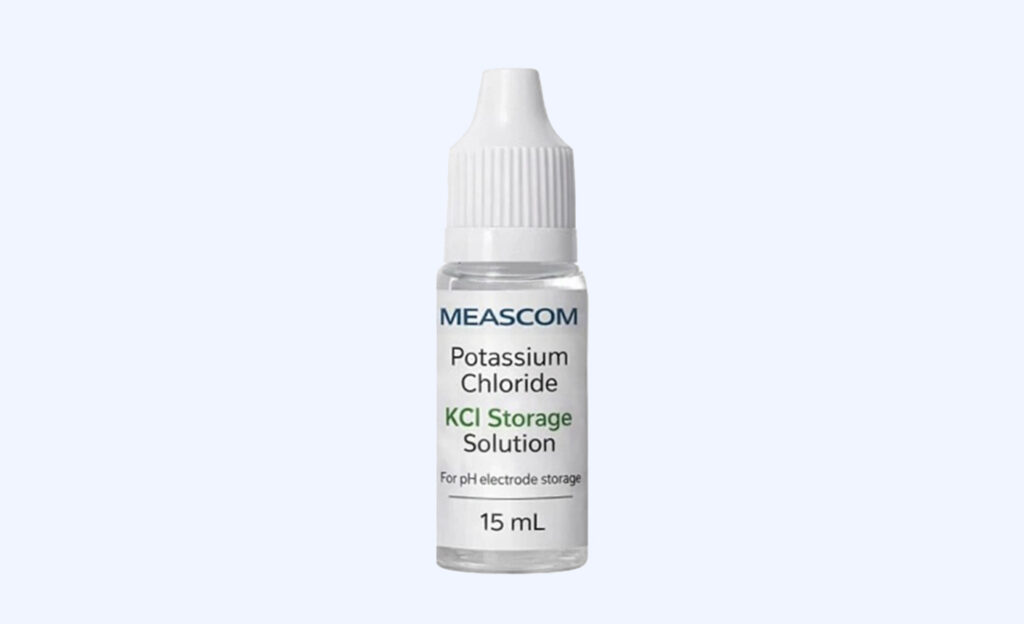
pH probes should be stored in potassium chloride (KCl) storage solution.
KCl:
- Maintains proper ionic balance
- Keeps the reference junction active
- Preserves probe sensitivity
- Extends probe life significantly
Most probe manufacturers recommend KCl for one reason: it works.
How to Store a pH Probe Correctly (Step-by-Step)
- Rinse the probe gently with clean water
- Shake off excess droplets
- Add KCl storage solution to the probe cap
- Ensure the glass bulb is fully covered
- Replace the cap securely
- Store upright where possible
Never allow the glass bulb to dry.
What If a Probe Has Already Dried Out?
If a probe has dried:
- Soak it in KCl storage solution for several hours
- Recalibrate before use
- Check response time carefully
In some cases, performance can be partially restored — but prevention is always better than recovery.
Storage and Calibration Go Hand in Hand
Even a perfectly calibrated meter will drift if the probe is stored incorrectly.
Proper storage:
- Reduces calibration frequency
- Improves repeatability
- Increases confidence in readings
- Extends probe lifespan
This isn’t maintenance — it’s good measurement practice.
A Simple Rule to Remember
If the probe isn’t in water being measured, it should be in KCl.
No exceptions.
Measure With Confidence
Accurate measurement doesn’t come from the meter alone.
It comes from:
- Proper calibration
- Correct probe storage
- Consistent process
When probe care becomes routine, accuracy follows.
That’s how professionals measure with confidence.
Call to Action (Natural & Relevant)
Protect your pH probe and your measurements
Meascom KCl storage solution is formulated specifically for pH probe care — helping maintain accuracy, stability, and probe life between measurements.
[Shop pH Probe Storage Solution →]
(CTA can link directly to your KCl product page or be paired with a bundle.)
SEO Metadata (Yoast-Optimised)
Meta title
How to Store a pH Probe Properly (Avoid Costly Mistakes)
Meta description
Learn how to store a pH probe properly using KCl storage solution and avoid premature probe failure and inaccurate readings.
Slug
how-to-store-ph-probe
Internal Link Suggestions
- How to Calibrate a pH Meter
- Why Pool pH Drifts
- Total Alkalinity Buffers pH
- Digital pH Meters
- pH Calibration Buffers
Next strong support articles (optional)
If you want to round this out fully:
- Why Cheap pH Meters Drift (and How Professionals Avoid It)
- pH vs EC vs TDS — What Should You Measure and When?
- How to Test Pool Water Accurately (Without Over-Correcting)
Tell me which one you want next, or if you want these grouped into a pH learning hub page for Meascom.